


Revealing the Mystery of Glass as a Non-Solid
2025-02-24
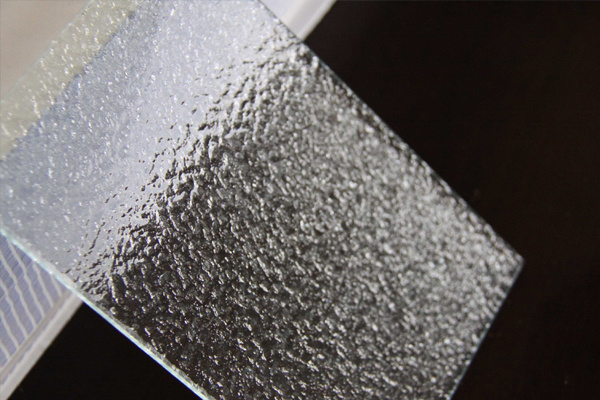
In the experiment, in order to observe the true motion of microscopic atoms, researchers used larger colloidal particles to simulate atoms and observed them with a high-powered microscope. The results showed that the gel formed by these particles could not crystallize due to its icosahedral structure, which is consistent with the predictions made by Charles Frank at the University of Bristol in the 1950s. This structure explains why glass is 'glass' rather than a liquid or solid.
This research represents a significant breakthrough in understanding metastable materials, making it possible to further develop new materials such as metallic glass. Additionally, if it is possible to manipulate metals to form glass-like internal structures during cooling, it could greatly reduce metal defects. (Science Net, Mei Jin/compiled)
(Nature Materials, doi:10.1038/nmat2219, C. Patrick Royall, Hajime Tanaka)
The surface of glass appears solid, but in reality, it is not. For more than 50 years, scientists have been trying to understand the nature of glass. A joint study by scientists from the UK, Australia, and Japan found that the reason glass cannot become solid is due to the special atomic structure formed when glass cools. The related paper will be published online in Nature Materials.
The main researcher, Paddy Royall from the University of Bristol in the UK, said: "Some materials crystallize when cooled, with their atoms arranged in a highly regular pattern known as a 'lattice'. However, when glass cools, the atoms become congested and are arranged almost randomly, hindering the formation of a regular lattice."
Previous:

Contact Us
Telephone:+86-595-82102333 82102000 22339988
E-mail:wang@nyiglass.com
Address: No.7 Jiayuan Road, Wuli Development Zone, Jinjiang, Fujian, China
Glass deep processing business cooperation? consult now
Xinyi Environmental Protection and Energy Saving LOW-E Glass Franchisee in Fujian


Telephone:
E-mail:wang@nyiglass.com
Address: No.7 Jiayuan Road, Wuli Development Zone, Jinjiang, Fujian, China

Public Number